Grass grid pavers are the compromise for those who want a green surface and a load-bearing pavement at the same time. Grass grows through the openings of the grid, while the structure carries the weight of a car or even a heavier vehicle. There are two main types: the lightweight plastic grid and the solid concrete grass grid. Let's see which is the better choice, and when.
Why choose grass grid pavers at all?

One big drawback of a conventional sealed pavement is that it doesn't let rainwater through. Water runs off the surface and loads the drainage network — something very visible across the province of Málaga during the torrential autumn downpours — and the surroundings heat up more and more with every sealed surface added. Grass grid pavers, by contrast, let rainwater soak into the ground, reduce heat build-up in the hot Costa del Sol summers, and look far friendlier too. Typical uses are occasionally used car parks, fire-brigade access routes and the wheel tracks of a driveway.
The plastic grass grid
The plastic version is made from recycled material, is light and quick to install. One person can lay it single-handed: the panels click together and are easily cut to size with shears or a saw. It is ideal where the traffic is mainly pedestrians or bicycles, or where only light passenger cars park.
- Advantages: inexpensive, lightweight, fast to lay, and it virtually disappears under the grass.
- Drawbacks: lower load capacity; not recommended for very heavy use.
The concrete grass grid
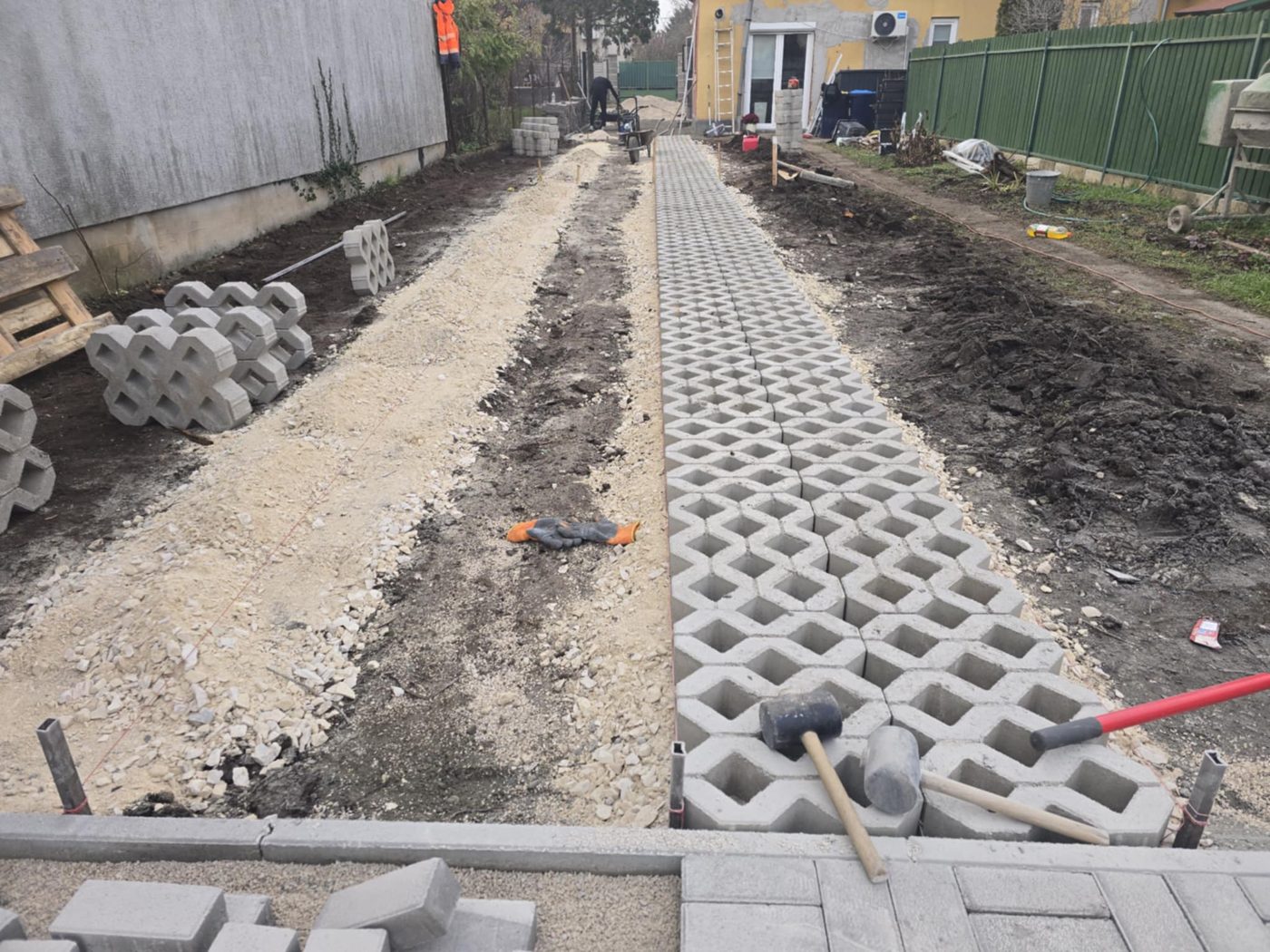
Concrete grass grid pavers are heavy, solid and carry considerably greater loads. They are the right choice wherever vehicles park or move regularly, and where the pavement has to perform for the long term — summer after summer and through the winter rains. Laying them takes more work and a carefully prepared bedding layer, but in return their service life is practically unlimited. Quality blocks comply with UNE-EN 1338, the standard for concrete paving blocks.
- Advantages: extremely load-bearing, durable, weather-resistant.
- Drawbacks: heavy, more laborious to lay, more expensive.
So which one?
If you need a light solution for occasional traffic and quick installation, the plastic grid is perfect. If the goal is regular car traffic or a long-term, "forever" solution, it pays to move towards the concrete version. Ultimately the decision comes down to the expected load and your budget — and either is a far better choice than yet another sealed concrete slab in the garden. If you'd like the full picture, see our article on the benefits of concrete grass pavers.
Thinking about a green, drivable surface in the province of Málaga? Call us on +34 613 656 443, write to oficina@adoquin.eu or request a free quote — after a free site survey we will give you a detailed, itemised offer.
Planning a paving project?
Request a free site survey: we measure, advise, and within 1–2 working days you receive a detailed written quote.